The 30-second version
- What it is: The backhand overhead in pickleball is the shot you hit when a lob drifts over your non-dominant shoulder and you take it out of the air instead of letting it bounce.
- Why it matters: Letting the lob bounce means retreating off the kitchen line. You hand your opponents the net, and the geometry of the court starts working against you.
- It is not a put-away. Aim at your opponents feet, not the back fence. This is a pressure shot that keeps you in the point as the aggressor.
- Three steps: read the lob early, step back and coil your hitting shoulder, then snap your wrist through contact and recover to the line.
- Build it in layers: groove the wrist snap first, add the step back, then the shoulder coil, then put the whole swing together.
- New England note: outdoor lobs move in the wind and disappear into a low afternoon sun, so early recognition matters even more here than it does indoors.
Walk onto almost any open-play court in New England and you will see the same thing happen a dozen times an hour. A team works hard, earns the kitchen line, and then someone floats a lob over the backhand shoulder of the player on the left. That player backpedals, lets it bounce, and the whole team retreats to the baseline. The point is not lost yet, but it is already going the wrong way.
The fix is a shot most rec players never practice: the backhand overhead in pickleball. It is the answer to a lob you cannot reach with a forehand, and it is the difference between keeping the net and giving it away. This guide covers what the shot is, why players avoid it, the three-step motion, where to aim, and how to actually drill it.
What is a backhand overhead in pickleball?
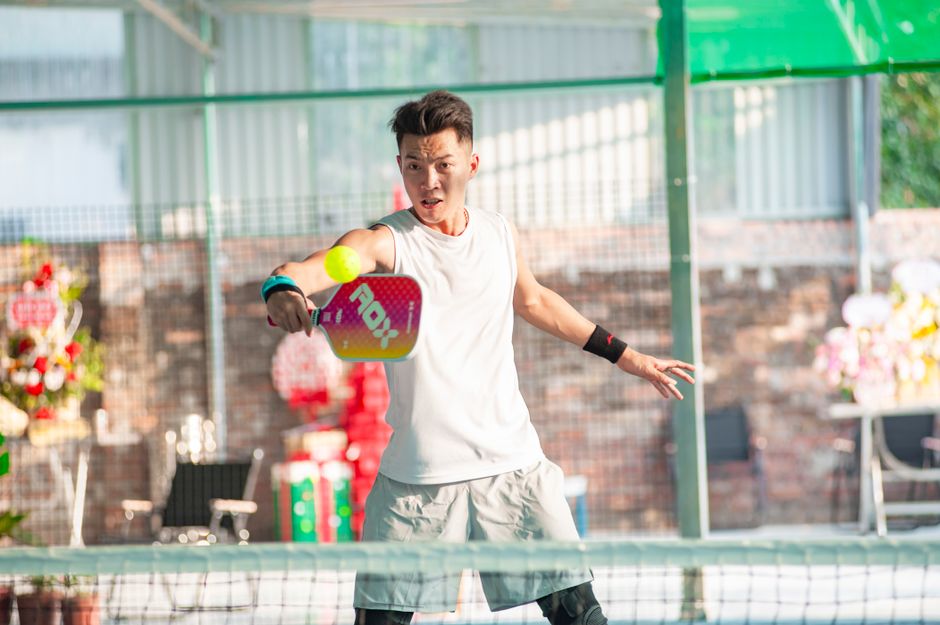
A backhand overhead is a smash hit from a high contact point on your non-dominant side. If you are right-handed and a lob sails over your left shoulder, that is backhand overhead territory.
It is worth being precise about how this differs from the shot most people already know:
- A forehand overhead is a finishing shot. You get under the ball, wind up, and try to end the rally. Our guide to the overhead smash covers that version.
- A backhand overhead is a position shot. The goal is not to end the point. The goal is to get the ball down at your opponents feet and stay at the kitchen line while you do it.
That difference changes everything about how you swing it. You are not trying to blast anyone off the court. You are trying to take a ball that was meant to push you backward and turn it into a ball your opponents have to dig up from below net height.
Why do most players back up instead of hitting it?
Because a high contact point on the backhand side feels unnatural, and retreating feels safe. It isn’t.
Here is what backing up actually costs you:
- You give up the kitchen line you spent the whole rally earning. Your opponents move forward the moment they see you drop back.
- You end up hitting from the baseline while they own the net. That is the worst position pairing in doubles, and it is hard to escape. Our breakdown of pickleball court positioning goes deeper on why.
- You invite more lobs. Once a team learns you retreat every time, the lob becomes their free button. Players stop lobbing you the moment they see you can punish it.
There is also a skill gap underneath the habit. Being comfortable with a backhand dink or a backhand counter at chest height is a completely different thing from being comfortable above your shoulder. If you play with a two-handed backhand, that second hand actively gets in your way up there, which is part of why the two-hander crowd retreats most often.
How do you hit a backhand overhead in pickleball?
Three steps. None of them are complicated, but they have to happen in order, and the first one happens before you move at all.
Step 1: Read the lob early and claim the ball
The shot is won or lost in the first half-second. As the ball leaves your opponent’s paddle, you need to answer two questions:
- Can my partner take this with a forehand overhead? If yes, let them. A forehand overhead is the stronger shot, every time.
- Is it going over my backhand shoulder and out of my partner’s reach? If yes, it is yours. Commit now.
Waiting to decide is what produces the flailing, off-balance swipe you see on rec courts. Commit late and you have no time to step back, no coil, and no chance of controlling where the ball goes. This is the same tracking skill covered in how to anticipate in pickleball – the earlier you read the ball, the more shot you have available.
Step 2: Step back and coil your shoulder
This is the step almost everyone skips, and skipping it is exactly why a backhand overhead so often looks like a panic swat.
- Step back with your dominant foot to create space. You want the ball slightly in front of you, not on top of your head.
- Rotate your hitting shoulder back and let your core coil with it. This is where the power comes from – not from the arm.
- Keep your eyes on the ball through the whole setup. Looking at your opponents mid-setup is how you mistime it.
- Stay balanced. Do not lunge and do not reach. If you have to lunge, it was your partner’s ball.
Players with a squash or tennis background tend to pick this up quickly, because the coil-and-reach pattern is already in their body. Everyone else needs reps – but the motion itself is simple once it is broken apart.
Step 3: Snap your wrist and target their feet
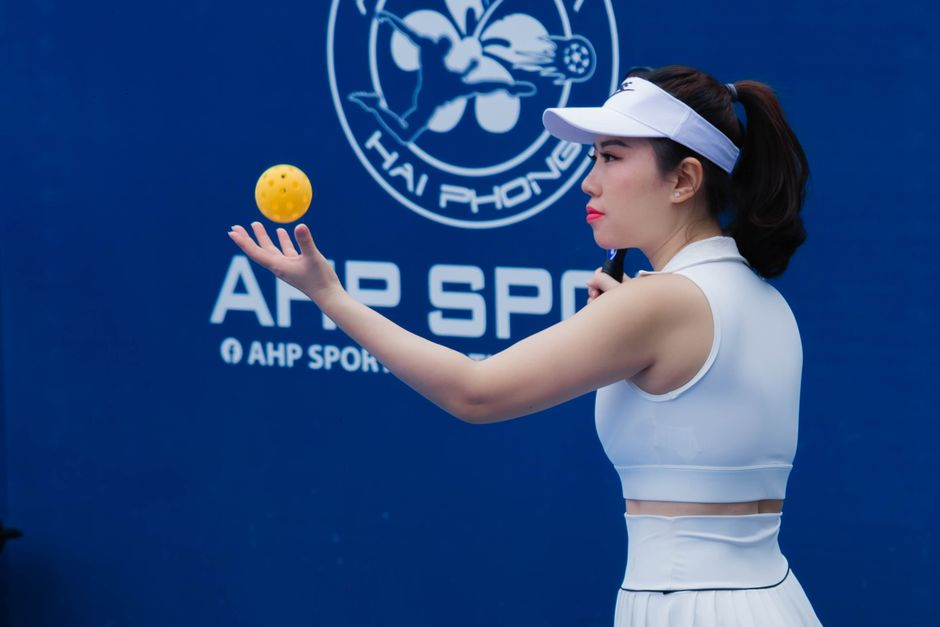
The pace on this shot comes from a sharp wrist snap at contact, not from a big arm swing. Think of cracking a whip: the arm sets the path, the wrist delivers the speed.
- Contact the ball at or slightly in front of your body – never behind you. Behind you means a floater.
- Snap through the ball and drive it downward. Without that snap, the ball hangs, and a hanging ball at the kitchen is a gift.
- Aim at their feet or ankles. Not the sideline, not the fence.
- Recover to the kitchen line immediately. This is not optional.
That last point deserves emphasis. If you hit a clean backhand overhead and then drift back into the transition zone, you just gave away the exact advantage the shot existed to protect. Hit it, then get back to the line.
Where should you actually aim it?
At their feet. Every time, until you have a reason not to.
A ball driven down at an opponent’s feet does two useful things at once:
- It forces a low, awkward dig. Most players pop that ball up, which hands you a genuine put-away on the next shot.
- It keeps you on offense. They are scrambling and defending; you are set at the line waiting.
Trying to hit a winner from a backhand overhead is how you end up spraying the ball into the net or the back fence. The shot does not have that much margin. Play it as the setup, and let the next ball be the finisher. If your opponents do manage to get it back low and hard, that is what resetting is for.
How do you practice the backhand overhead?
In layers. Trying to learn the whole motion at once is why most players give up on this shot after one frustrating session.
The layered backhand overhead drill
- Wrist only (5 minutes). Stand still, hold the ball up at a high backhand contact point, and just snap it downward. No footwork, no coil. Get the feel of the whip.
- Add the step back (5 minutes). Have a partner toss soft lobs over your backhand shoulder from the other side. Step back, then snap. Ignore where it lands.
- Add the coil (10 minutes). Same feed, but now rotate the shoulder back before you swing. You should immediately notice more pace for less effort.
- Add a target (10 minutes). Put a towel or a cone at your partner’s feet. Score yourself out of ten.
- Live it (10 minutes). Play out points where your partner is allowed to lob you at will. Recover to the line after every single one.
Solo option: a ball machine set to a high, slow trajectory over your backhand side does the same job – so does a friend with a bucket of balls and no particular interest in playing.
Twenty to forty minutes of this, twice, and the shot stops feeling foreign. Fold it into the rest of your practice block with our pickleball drills guide.
What makes this shot harder on New England courts?
A few things that never come up in an indoor training video:
- Wind moves lobs more than any other shot. A lob hangs in the air longer than anything else in pickleball, which gives the wind more time to work on it. On an exposed court in a coastal town or an open town park, commit early and then keep adjusting your feet right up to contact.
- Late-afternoon sun is brutal outdoors. Evening open play puts the sun low, and a lob goes straight into it. If you cannot track the ball, do not take the swing – call it off and let it bounce deliberately rather than swing blind.
- Winter changes the math. A lot of our indoor season happens in gyms and community centers with low ceilings, where big lobs simply are not available. The shot gets rusty over the winter and comes back needed in April. Our indoor pickleball guide has more on that transition.
- Rec-level lobbing is common here. At the 3.0 to 3.5 open-play level, the lob is a primary weapon rather than an occasional surprise. That makes this a higher-value shot for the average New England player than it would be in a mostly-tournament crowd.
Looking for somewhere to work on it? Our New England court directory lists free and public courts across all six states.
What are the most common mistakes?
- Deciding too late. The single biggest one. Late commitment removes every other option.
- Never stepping back. The ball ends up over your head and you have no leverage.
- Swinging with the arm only. No coil, no snap, no pace – just a high, slow ball your opponents get to attack.
- Trying to hit a winner. High risk, low reward. Play the feet.
- Taking your partner’s ball. If they can reach it with a forehand overhead, it is theirs. Say so out loud.
- Forgetting to recover. Great shot, then a slow walk backward, and the advantage is gone.
Frequently asked questions
Is a backhand overhead the same as a backhand smash?
Yes – the terms get used interchangeably, and some coaches say backhand overhead smash. They all describe taking a lob out of the air on your non-dominant side from a high contact point.
Should I hit a backhand overhead with one hand or two?
One hand. Even players who use a two-handed backhand off the bounce almost always release the off hand for a high contact point, because the second hand restricts your reach and blocks the shoulder rotation you need.
When should I just let the lob bounce instead?
When you genuinely cannot track the ball – sun, glare, or a lob that already got behind you – and when your partner has a clean forehand overhead available. A deliberate, balanced retreat beats a blind swing every time. The mistake is retreating by default rather than by choice.
Why does my backhand overhead keep floating long?
Almost always one of two things: you are contacting the ball behind your body instead of in front of it, or you are pushing at the ball with a stiff wrist rather than snapping through it. Fix the contact point first, then the snap.
What rating should I be before learning this shot?
Around 3.0 is a sensible starting point, once your basic net game is stable. Below that, your practice time pays off faster on dinks, drops, and positioning. If you are working through the levels, our Improve Your Game hub lays out what to prioritize at each stage.
Source and further viewing: the three-step framework here follows a lesson from pro player Hannah Blatt, whose squash background turned this into a signature shot, as broken down by The Dink Pickleball on July 27, 2026. Worth watching if you want to see the motion at full speed.
Jason Regan is a USA Pickleball Ambassador for North Central Massachusetts and the founder of Regan Family Pickleball.