
Quick answer: The fifth shot in pickleball is the serving team’s next shot after their third shot. It’s usually hit from the transition zone, and its job is to finish the trip to the kitchen line. It’s also the first shot the serving team is allowed to volley, so the right fifth shot is often a soft volley or a drop, not another drive.
The 30-second version
- What it is: shot 5 of a rally (serve, return, third, fourth, fifth). It’s the serving team’s second shot after the serve.
- Why it matters: it decides whether the serving team reaches the kitchen line or gets stuck in the transition zone.
- Volley allowed: the two-bounce rule is over by then, so you can take the fifth out of the air.
- Default choice: a drop or soft volley into the kitchen, then step in.
- The exception: a fourth shot that floats high is a ball to attack, not to drop.
Every rec player hears about the third shot. Almost nobody talks about the fifth, even though it’s the shot that gets the serving team to the net. Here’s what it is, which shot to choose, and how to practice it.
What is the fifth shot in pickleball?
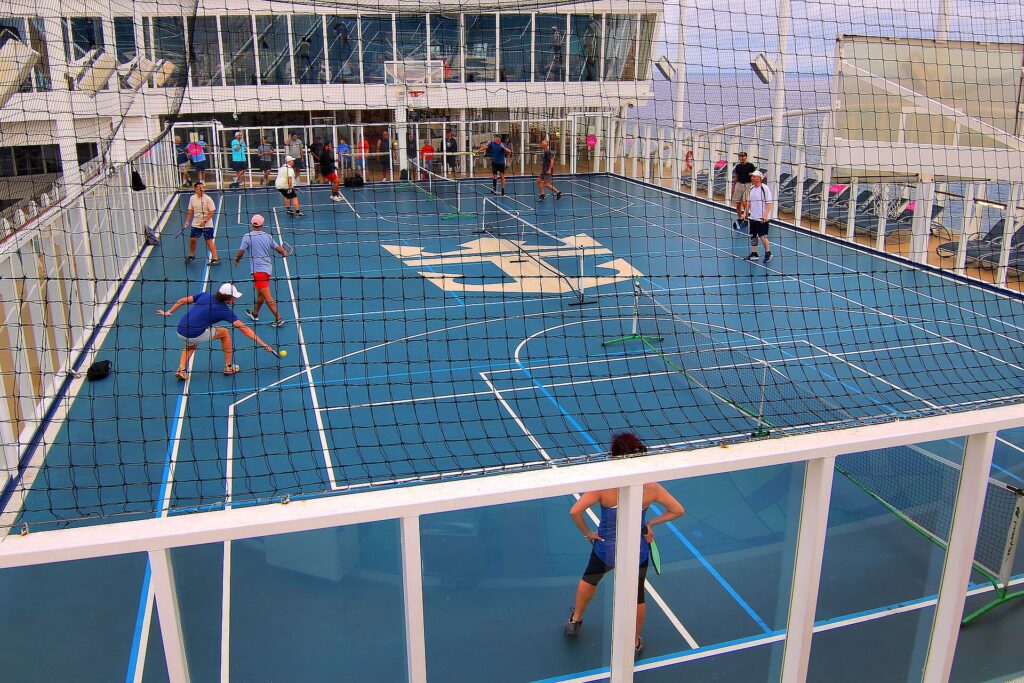
The fifth shot in pickleball is the fifth hit of a rally, and the serving team’s third hit. The order goes: (1) serve, (2) return, (3) the serving team’s third shot, (4) the receiving team’s reply, usually from the kitchen line, and (5) the serving team again. By shot five, the receiving team is normally set at the kitchen line. The serving team is usually somewhere between the baseline and the kitchen, trying to join them.
Why does the fifth shot matter so much?
The fifth shot matters because it decides whether the serving team reaches the kitchen line on even terms. The serving team starts every rally at a disadvantage: the two-bounce rule keeps them back while the receivers move up. The third shot starts the trip forward. The fifth shot usually finishes it.
- A good fifth lands low in the kitchen or at the opponents’ feet, and buys the time to take two more steps in.
- A bad fifth floats up. The receivers are already at the net, so they attack it at your feet while you’re still moving.
Pros plan around this. Writing about Ben Johns on November 10, Pickleball.com analyst Jim Kloss described Johns’s drives as “merely a method by which he gets an easier fifth shot to drop.” His column treats the drive as the setup, and the fifth shot as the one that matters.
Can you volley the fifth shot in pickleball?
Yes. You can volley the fifth shot, because the two-bounce rule only covers the serve and the return. The return has to bounce before the serving team hits it, so the third shot is always a groundstroke. After that, anyone can volley. That makes the fifth shot the first chance the serving team gets to take the ball out of the air.
That matters more than it sounds. Volleying the fourth shot, instead of letting it bounce, means you don’t get pushed back toward the baseline. A soft drop volley from the transition zone is one of the best fifth shots you can learn. Just stay out of the kitchen when you hit it. Our kitchen rules guide explains why.
Which fifth shot should you hit?
The right fifth shot depends on how high the fourth shot comes to you and where you’re standing when you hit it. Use this as a simple decision guide:
| Fourth shot arrives… | Best fifth shot |
|---|---|
| Low, at your feet, while you’re in the transition zone | A reset: soft into the kitchen, then stop and split step |
| At waist height, mid-court | A drop volley into the kitchen, then move in |
| High, above the net | Attack: volley down at feet or through the middle |
| Deep, pushing you back to the baseline | Another drop, the same as a third shot |
| Soft, after you’ve already reached the kitchen | A dink, and the rally is now even |
The pattern: the lower the ball and the farther back you are, the softer the fifth. Our reset guide and drop vs drive guide cover the technique behind each choice.

How do you hit a good fifth shot drop?
You hit a good fifth shot drop with the same compact, low-to-high motion as a third shot drop, just shorter, because you’re closer to the net. Five keys:
- Split step first. Stop your feet as the opponent hits the fourth. Hitting while running forward is the biggest reason fifth shots float.
- Get low. Bend your knees to the ball instead of dropping the paddle head.
- Shorten the swing. From mid-court, a third shot swing sends the ball long. Think push, not swing.
- Aim for the kitchen, not the line. A ball that bounces in the middle of the kitchen is safer than one that skims the net.
- Move only after you see it drop. If it’s low, take two steps in. If it’s high, stay put and get ready to defend.
For the footwork between shots three and five, our transition zone footwork guide goes step by step. If your third shot is still shaky, start with how to hit a third shot drop.
Should you drive the fifth shot?
You should drive the fifth shot only when the fourth shot sits up for you. That means it’s high, or the receiving team has left a gap in the middle. Driving a low ball from the transition zone usually hits the net or sets up a counter for the team already at the line.
Here’s a better way to think about it. A drive on the third can be fine if it makes the fourth shot weak, and then your fifth is an easy drop or put-away. That’s the pattern Kloss described in Johns’s game. For when to change pace once you’re at the line, see our guide to when to speed up.
What are the most common fifth shot mistakes?
Most fifth shot mistakes come from rushing forward. These four cost rec players the most points:
- Hitting on the move. No split step means no balance, and the ball floats.
- Stopping in no-man’s land. After a good fifth, keep moving in. Standing still at mid-court invites balls at your feet.
- Letting the fourth bounce. Waiting for the bounce pushes you back. Volley it if you can.
- Going too hard too soon. One perfect fifth is worth more than three hopeful drives.
What drills improve the fifth shot?
The best fifth shot drills start you in the transition zone, because that’s where the shot happens. Three to try at your next indoor session:
- Feet-feeds (10 minutes). Stand mid-court. A partner at the kitchen feeds balls at your feet. Reset each one into the kitchen, and score how many land soft.
- 3-5 pattern (10 minutes). Hit a third shot drop, move in, then play the fourth however it comes. Repeat until moving in after the drop is automatic.
- Volley or bounce (10 minutes). A partner hits mid-height balls. Call “volley” or “bounce” before contact, and hit the drop volley whenever you can.
Indoor courts are the best place to drill all winter. Find one near you through our Massachusetts indoor guide or the full court directory.
Frequently asked questions
What is the fifth shot in pickleball?
The fifth shot is the fifth hit of a rally and the serving team’s third hit, after the serve and the third shot. It’s usually hit from the transition zone as the serving team moves to the kitchen line.
Can you volley the fifth shot in pickleball?
Yes. The two-bounce rule applies only to the serve and the return, so the fifth shot can be volleyed. It’s the first shot the serving team may take out of the air.
Should the fifth shot be a drop or a drive?
Usually a drop or soft volley into the kitchen, especially if the ball is low or you’re still moving forward. Drive or attack only when the fourth shot comes back high.
Why do my fifth shots pop up?
The most common cause is hitting while still running forward. Split step as your opponent hits the fourth shot, bend your knees, and shorten your swing.
How is the fifth shot different from the third shot drop?
The third shot is always hit off a bounce, usually from near the baseline. The fifth is hit closer to the net and can be a volley, so it needs a shorter, softer motion.
