Quick answer: Pickleball in cold weather is completely playable if you change four things: the ball, what you wear, how you warm up, and how you judge the court surface. Plastic pickleballs get harder and more brittle as the temperature drops, so they bounce lower, play faster and crack sooner. Dress in thin layers you can peel off and put back on, warm up longer than feels necessary, and take it indoors when frost, ice, wet leaves or a serious wind chill show up.
The 30-second version
- Bring more balls than you think. Cold plastic turns brittle, and hard hitters crack balls fastest.
- Keep a spare ball warm. Selkirk’s own tip: carry one in your pocket and swap it in after each game.
- Expect a lower, faster bounce. Onix says every pickleball bounces lower in the cold, and Selkirk says the harder ball speeds the game up.
- Layer thin, not thick. Wicking base, warm middle, windproof shell, and no cotton against your skin.
- Beware the gap between games. You sweat on court and chill on the bench. Put a layer back on the moment you walk off.
- A slick court ends the session. Frost, wet lines and wet leaves are the real cutoff, long before the thermometer is.
- Know when to go inside. Mayo Clinic suggests moving indoors below zero degrees Fahrenheit or in extreme wind chill.
In north central Massachusetts the outdoor pickleball season does not end on a date. It frays. September mornings turn crisp, October brings the first hat-and-sweatshirt starts at open play, and by November every group chat has the same debate about whether it is worth going out. Most days it is, right up until the surface gets slick. This guide covers everything I have learned about keeping a game going through a New England fall: which balls survive, what to wear, how to warm up, how the game changes, and the conditions that should send you indoors.
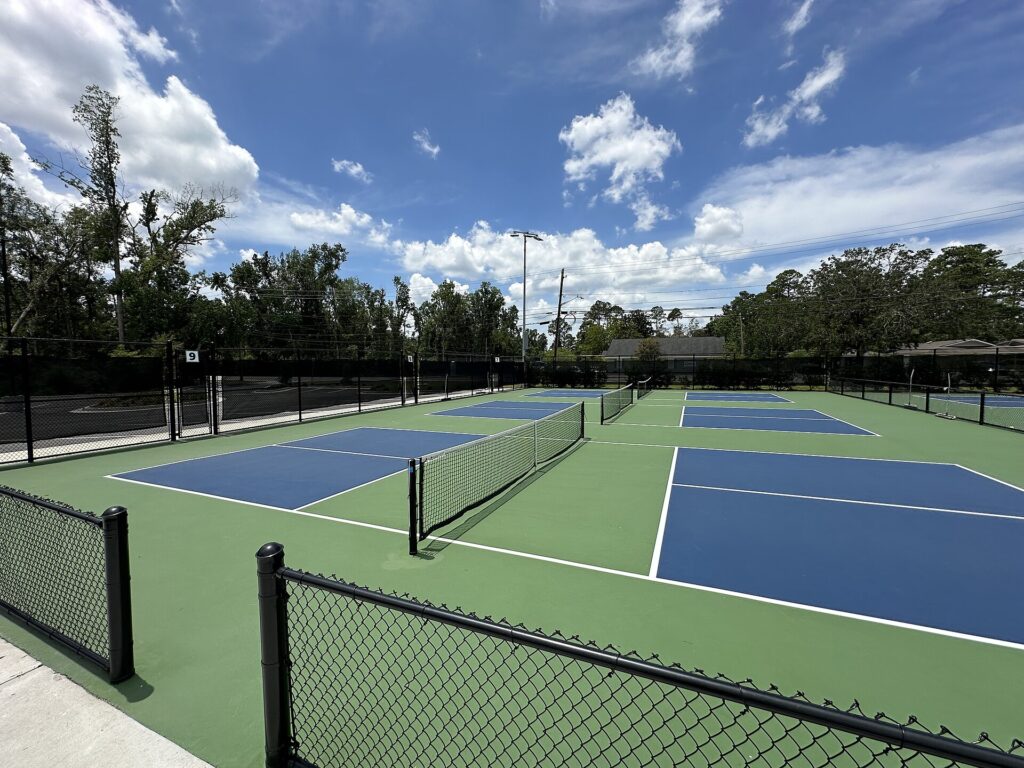
Can you play pickleball in cold weather?
Yes. A rec game has no temperature cutoff; the limits are your equipment, the court surface and your body. On the body side, Mayo Clinic’s sports medicine team puts it plainly: exercise is safe for almost everyone, even in cold weather. The exception they call out is worth repeating. If you have asthma, heart problems or Raynaud’s disease, check with your doctor about any special precautions before you play in the cold.
The other limit in New England is logistical. Towns wind outdoor programs down in the fall, and the details are easy to miss:
- Nets may not be up. In Biddeford, Maine, the free park nets live in a locked storage bin, and you get the combination by completing the city’s free seasonal registration. Our Biddeford guide has the details.
- Schedules have end dates. Brunswick’s dedicated outdoor courts run a published schedule from April through October, as we covered in our Brunswick guide.
- Check before you drive. A quick look at your rec department’s page, or our court directory, saves a wasted trip to a netless court.
Why do pickleballs crack in cold weather?
Because they are plastic. Selkirk explains it this way: plastic contracts as it gets colder, which makes it more brittle, and a brittle ball is more likely to crack, particularly during vigorous play. Two more points from that same piece matter on court:
- The game gets faster. A colder ball is a harder ball, and Selkirk notes the game tends to move faster as temperatures drop.
- Bangers break balls. Aggressive players who hit hard are more likely to crack balls than players who rely on a softer game.
Onix adds that the bounce height of all pickleballs is lower in colder weather. So the cold ball arrives faster and sits lower, which is exactly the combination that exposes lazy footwork.
What to do about it:
- Pack extras. Bring twice your summer supply and expect to lose one or two in a cold session.
- Rotate. Selkirk’s practical fix is to keep an extra ball in your pocket, warmed by body heat, and rotate it with the ball in play after each game.
- Store them warm. By the same logic, keep your ball bag in the house rather than in a cold car overnight.
- Retire cracked balls immediately. A cracked ball plays dead and unpredictably. Our ball guide covers when to replace one.
Which ball should you use for pickleball in cold weather?
There is no independent cold-weather ball test we trust enough to crown a winner, so here is what the manufacturers themselves say, clearly labeled as their claims:
- Onix Fuse G2. Onix recommends it for cold weather, saying its seam welding resists splitting and its softer material does not feel as hard in temperatures below 50 degrees.
- Onix Pure 2. Onix says its high rubber content makes it durable across temperatures, but also says its bounce is higher than the USA Pickleball limit, so it is not an option where an approved ball is required. Onix’s argument is that cold weather pulls its bounce back toward spec.
Two honest caveats. First, these are brands describing their own products; we have not tested either ball in the cold. Second, if you play in sanctioned events or a league that requires approved equipment, check the ball against the list at equipment.usapickleball.org before you buy a sleeve for winter. For a casual group, the most useful rule is simpler: agree on one ball for the session so everyone is adjusting to the same bounce.
What should you wear for cold-weather pickleball?
The biggest mistake is the heavy coat. Mayo Clinic calls dressing too warmly a big mistake in cold-weather exercise, because activity generates a lot of heat and the evaporating sweat then chills you. Its recommended system translates neatly to a pickleball court:
- Base layer: a thin synthetic that pulls sweat away from your skin, such as polypropylene. Avoid cotton, which stays wet.
- Middle layer: fleece or wool for insulation. A quarter-zip is ideal because you can vent it mid-game.
- Outer layer: a waterproof, breathable shell. Mayo notes wind can strip away the insulating layer of warm air around your body, so a shell earns its spot even on dry days. Our wind guide covers the tactical side.
- Head and ears: a hat or headband. Mayo notes blood flow concentrates in your core when it is cold, leaving head, hands and feet vulnerable.
- Hands: Mayo suggests thin wicking glove liners under heavier gloves, removing the outer pair once your hands sweat. On court, a thin liner on your paddle hand keeps some grip feel, and a chemical heat pack in your pocket rescues numb fingers between games.
- Feet: court shoes with real traction. Mayo also suggests going up a half size to fit thicker socks, but pickleball involves hard lateral stops, so try a thicker sock in your normal size first; a loose shoe is an ankle risk. See our shoe guide.
- Eyes and skin: low fall sun is brutal on some court orientations, and Mayo points out you can sunburn in winter as easily as in summer. Sunscreen and sport eyewear still belong in the bag.
How should you warm up for pickleball in the cold?
Give it more time than you would in July. Cold hands, a cold ball and stiff calves are a bad combination for a first-game overhead.
- Move before you hit. Five minutes of light jogging, side shuffles and leg swings before anyone picks up a paddle. Our warm-up routine works well here.
- Start soft. Dinks and soft-game exchanges first, then volleys, then drives. Save overheads and full-speed serves for the second game.
- Re-layer between games. Mayo warns that stop-and-go activity makes you more vulnerable to cold, because you repeatedly work up a sweat and then get chilly. Pickleball is the definition of stop-and-go. Keep a jacket on the fence and put it on the moment you come off court.
- Drink anyway. Mayo notes dehydration is just as real in the cold and harder to notice. Drink before, during and after, even if you are not thirsty.
Cold, tight muscles are one reason calf strains and tweaked shoulders show up in the fall. If something already hurts, read our guide to common pickleball injuries before you push through a cold session.
How does cold weather change the way pickleball plays?
If the ball is harder, faster and bounces lower, the practical adjustments follow:
- Get lower, earlier. A lower bounce punishes standing tall. Bend your knees before the ball arrives, not as it arrives.
- Split-step every time. A faster ball leaves less reaction time, so a disciplined split-step matters more in November than in June.
- Take pace off, do not add it. The ball already carries extra speed. Resets and soft blocks are more valuable, and ambitious drives sail.
- Play higher-percentage patterns. Numb fingers make fine touch unreliable. Build points patiently, as in our point construction guide, instead of chasing winners.
- Let the bangers crack the balls. If your opponent hits everything hard, keep a spare warm and let the ball wear out on their end.
When is it too cold or too slick to play outside?
For most New England players the surface decides long before the temperature does. Frost on the lines, a dew-soaked court on an early morning, and wet leaves blown onto the kitchen are all genuine slip hazards. My rule: if you would not walk across the court in socks, do not play on it.
On temperature itself, Mayo Clinic offers real numbers. The risk of frostbite is less than 5% when the air temperature is above 5 degrees Fahrenheit, but it rises as wind chill falls, and at a wind chill below minus 18 degrees frostbite can occur on exposed skin in 30 minutes or less. Mayo suggests taking a break or choosing an indoor workout if the temperature dips below zero or the wind chill is extreme.
| Conditions | Balls | Clothing | The call |
|---|---|---|---|
| Crisp fall morning, dry court | Your usual outdoor ball, plus spares | Long sleeves and one removable layer | Play |
| Cold and dry, some wind | Rotate a pocket-warmed spare every game; expect cracks | Base, middle and shell; hat; liner glove | Play, shorter session |
| Frost, wet lines or wet leaves | Irrelevant | Irrelevant | Wait for it to dry, or go inside |
| Below 0°F, or extreme wind chill | Irrelevant | Irrelevant | Indoors, per Mayo Clinic guidance |
The first three rows are a rule-of-thumb playbook, not medical thresholds. The last row reflects Mayo Clinic’s published guidance.
Where can you play indoors when it gets too cold?
Every New England winter ends the same way for outdoor players: indoors. The good news is that the options have multiplied. Start with our indoor pickleball guide for New England, which walks through facility types, costs and how indoor play differs, and our Maine indoor roundup if you are up north. Around Leominster, our local area page lists nearby options, and the court directory lets you filter the whole region.
One tip from experience: indoor court time books up fast once the first real cold snap hits. Lock in a winter membership or a recurring reservation in October, while the outdoor die-hards are still insisting it is fine.
Frequently asked questions
Can you play pickleball in cold weather?
Yes. There is no temperature cutoff for a rec game. Use more balls than usual because cold plastic cracks, dress in thin removable layers, and warm up longer. Mayo Clinic says exercise is safe for almost everyone in the cold, but people with asthma, heart problems or Raynaud’s disease should check with a doctor first.
What temperature is too cold for pickleball?
There is no official number. In practice the court surface usually decides first: frost, wet lines or wet leaves make it unsafe. For temperature, Mayo Clinic suggests moving indoors when it drops below zero degrees Fahrenheit or the wind chill is extreme.
Why do pickleballs crack in the cold?
Pickleballs are plastic, and plastic contracts and turns brittle as it gets colder, according to Selkirk. Brittle balls crack more easily, especially under hard hitting. Rotating in a spare ball kept warm in your pocket helps.
What should I wear to play pickleball in cold weather?
Layers you can remove: a thin wicking synthetic base, a fleece or wool middle layer and a breathable windproof shell, following Mayo Clinic’s layering advice. Add a hat or headband, a thin glove liner and court shoes with good traction. Avoid cotton and avoid overdressing.
What is the best pickleball for cold weather?
No independent test settles it. Onix recommends its Fuse G2 for cold weather and says it feels softer below 50 degrees. Whatever ball you choose, bring extras, rotate a warm spare, and check the USA Pickleball approved list if you play sanctioned events.
Sources: Selkirk Sport, How temperature affects a pickleball; Onix Pickleball, Best Cold Weather Pickleballs; Mayo Clinic Orthopedics and Sports Medicine, Exercising outdoors in winter. Ball claims are the manufacturers’ own. This article is general information, not medical advice.
Disclosure: Jason is a Selkirk Advocate and receives discounted product. Selkirk is cited here only for its published explanation of how temperature affects a ball; nothing in this article is a recommendation to buy a Selkirk product. Onix is quoted from its own published guidance, not endorsed.
Written by Jason Regan, who runs Regan Family Pickleball out of Leominster, Massachusetts, and plays outdoors as deep into the New England fall as the courts allow.
Related reading: indoor pickleball in New England · playing in the wind · the best pickleball balls · warm-up routine · pickleball for seniors